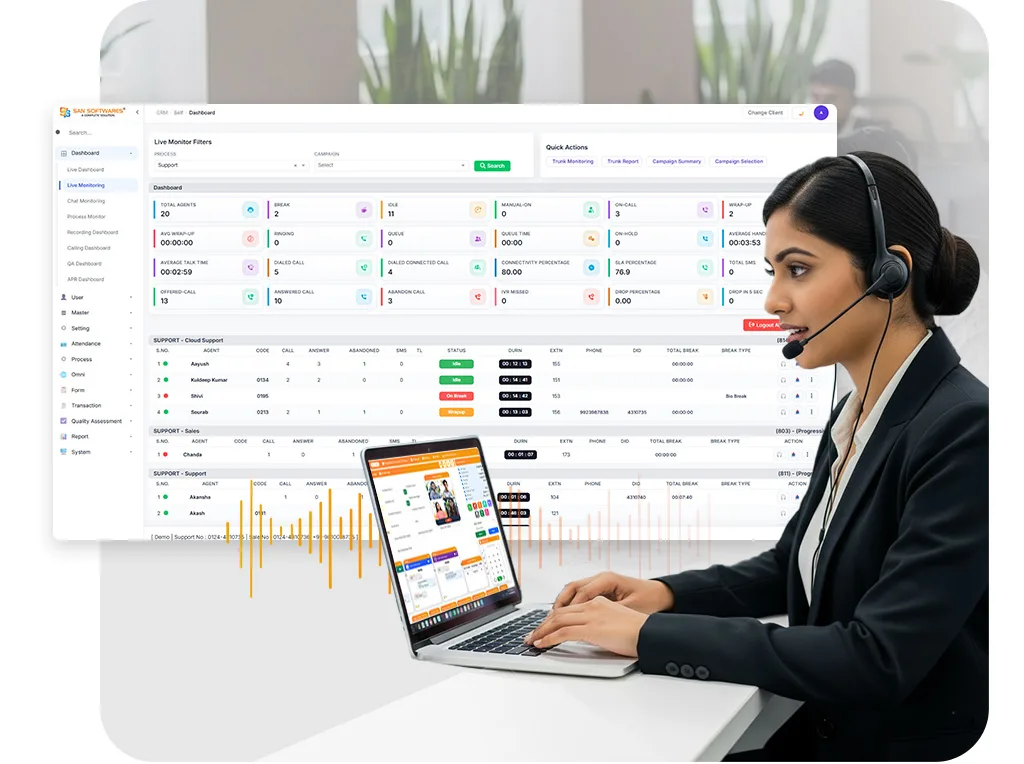
Smart Inbound Call Routing with Automated Call Distribution (ACD)

Manage your inbound calling more smartly with Automated Call Distribution (ACD). SanCCS ACD System ensures that every customer call reaches the right agent at the right time. Book a free demo with us today!

Automated Call Distribution (ACD) Banner

Empowering Businesses, Globally!

Get Benefits of Automated Call Distribution for Daily Call Operations

Increase Agent Productivity Icon

Increase Agent Productivity

ACD software balances workloads automatically, helping agents focus on conversations or handling useless calls.

Reduced Cost Icon

Reduced Cost

ACD System eliminates manual transfers and reduces idle time, maximizing efficiency and reducing cost per interaction.

Optimized Resource Management icon
Optimized Resource Management

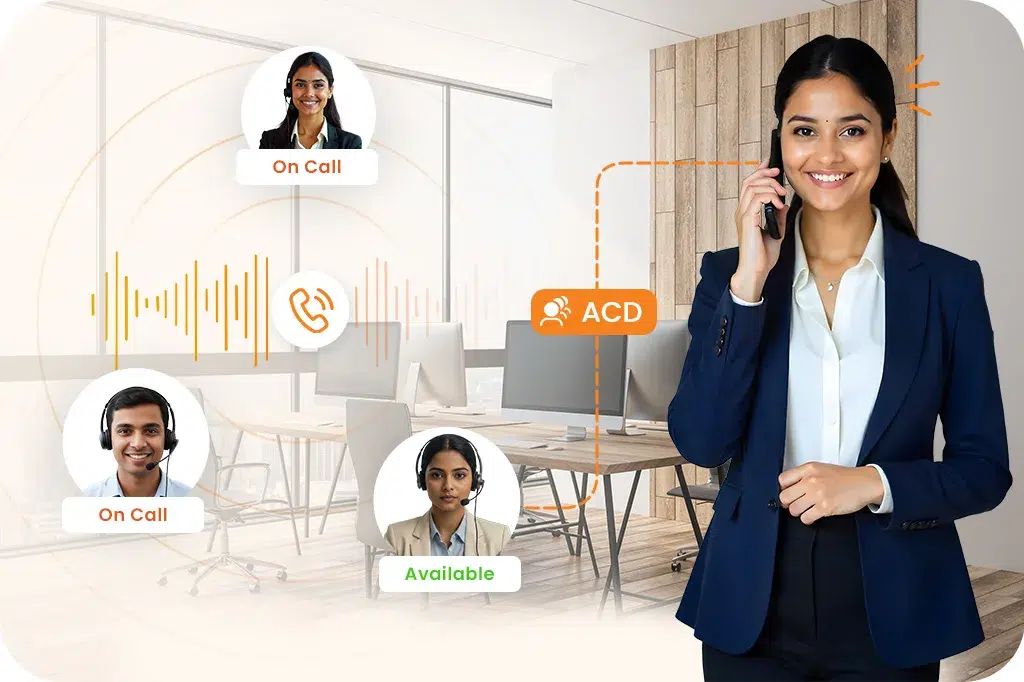
An intelligent automated call distribution system distributes calls based on availability, skills, and priority.

Improved Customer Experience

Improved Customer Experience

Automated call distribution connects clients instantly to available agents. It reduces wait times and repetitive transfers, wasting a lot of time.

Scalability and flexibility Icon

Scalability and flexibility

The cloud-based automatic call distribution system enables easy customization and quick scaling of agents based on demands.

Higher First Call Resolution Icon

Higher First Call Resolution

Automatic call distribution routes calls to only skilled agents who can resolve the issue faster.

What Are the Types of Automatic Call Distribution?

Idle Time-Based Call Distribution icon

Idle Time-Based Call Distribution

Idle time-based call distribution is also known as “longest idle agent” routing, which routes incoming calls to the available agent who has been inactive for a long period of time. It is a method of an ACD system that is designed to ensure the distribution of calls.

Round Robin Call Distribution Icon

Round Robin Call Distribution

Round robin is an automated call distribution method that sends incoming calls to agents in sequential order. This automated call distribution system ensures a balanced workload, reducing wait time, and maximizing team efficiency.

Channel Based Call Distribution

Channel Based Call Distribution

Channel-based call distribution is a type of ACD software that routes incoming calls to a specific agent based on the communication channel. It ensures agents handle inquiries through specialized channels to improve efficiency.

Simultaneous Call Distribution

Simultaneous Call Distribution

Simultaneous call distribution is an ACD solution that distributes incoming calls to available agents. As soon as a call comes in, every agent’s phone rings at the same time. The first agent to pick up the call will connect to the client, and the phone ring of the other agent will stop.

Skilled Based Call Distribution

Skilled Based Call Distribution

Skilled based directs incoming calls to the most qualified agent based on predefined expertise. It is not a random distribution, this ACD System analyzes the clients' needs and queues them to a skilled agent when required.

Core Features of Automatic Call Distribution (ACD) for Modern Contact Center

Call routing is an automated phone system

Call Routing

Call routing is an automated phone system that directs incoming calls to specific agents, teams, and departments. It is based on predefined criteria like language, or user inputs. A structured automated call distribution rules reduce call transfer, response time, and improve service consistency.

IVR System

An IVR System is an automated telephony technology that allows callers to interact with a business through keyword inputs (DTMF). It passes the data to the ACD System to route and call the agent. This helps to reduce call handling time, ensuring callers reach the specific department on the first call.

An IVR System is an automated telephony technology
Omnichannel integration in the ACD System unifies customer interactions

Omnichannel Integration

Omnichannel integration in the ACD System unifies customer interactions across chat, voice, social media platform and video into an intelligent routing platform. It replaces traditional call routing by providing agents with a wider view of client history. Omnichannel integration ensures consistent customer experience and efficient service.

CRM Integration

The ACD system can be integrated with any 3rd party or existing CRM tool, enabling seamless data flow. It allows agents to access caller profiles, interaction history, and open cases during calls. Integrating CRM with an ACD system bridges incoming calls and customer data for intelligent, personalized, and efficient routing.

The ACD system can be integrated with any 3rd party or existing CRM tool
Call queuing manages high incoming call volumes by placing client calls in a line when agents are busy

Call Queuing

Call queuing manages high incoming call volumes by placing client calls in a line when agents are busy. It prevents calls and reduces waiting time. With call routing in ACD system it enhances customer experience with on-call hold music until the call is routed to the next available agent, reducing abandonment rates.

Sticky Agent

A sticky agent is an advanced automatic call distribution feature that connects or routes the client to the exact agents they previously spoke to. It improves customer experience, ensuring continuity, and allowing for faster resolution. Sticky agents also value personalized service without the customer needing to repeat information.

A sticky agent is an advanced automatic call distribution

Call Monitoring

Call monitoring is the practice of listening to call conversations between clients and agents for quality assurance. Call monitoring in the ACD System enables the manager to observe, listen to, and analyze agent customer interaction live or via call recording. It improves quality control, agent training, and support via barging enhancing performance.

Call monitoring is the practice of listening to call conversations between clients and agents for quality assurance

How a Best Automatic Call Distribution Software Works?

If you want to know how best automatic call distribution software works, here are the points you should know.

Image
1

Call Identification (While Incoming calls)

Upon receiving a call, the system uses a caller ID, automatic number identification (ANI), or IVR menu to gather information about clients' needs.

2

Routing & Evaluation

The automated call distribution system analyzes the collected data and applies business rules to identify the most appropriate agent or department. This includes identifying agent skills to match the caller's needs.

3

Queue Management

During the high volume, calls are helpful in a logical queue. Advanced ACD systems may offer callback options to prevent long wait times.

4

Real Time Distribution

Automated call distribution software dynamically adjusts routing live, matching incoming calls to agent availability.

Use Case of the ACD System in Different Industries

Asset
With ACD solution in e-commerce and retail business you can handle high-traffic order inquiries, returns, and delivery support. It also ensures fast and efficient service during peak sales.
The ACD system can be used in the financial industry to route calls related to specific products and services. For instance, loans application, credit card calls to agents with appropriate expertise.
Automated call distribution can be commonly used in healthcare industry settings to route patient calls to the appropriate department. It is done in the case of scheduling and billing.
IT Companies' system supports technical queries with skill-based automated call distribution, accelerating issue resolution, and improving customer satisfaction.
Agent with Advanced Dialer Software

Frequently Asked Questions

Automatic Call Distribution (ACD) is a telephony system that answers incoming calls. It sorts them based on client needs and routes them to the best available agent. Automated call distribution eliminates busy lines and ensures callers reach the right expert quickly.
An ACD is a specialized telephony system designed to manage and route large volumes of incoming calls to specific agents or departments based on pre-set rules.

  • The difference: IPPBX System is a cloud-based phone hardware that connects internal extensions and makes external calls possible. However, ACD is intelligence layered on top. The PBX system transfers the call, and ACD analyzes the caller's data, checks which agent has been idle the longest, and routes the call to the person who can handle it.
These two often work together, but they serve different roles in the caller's journey. IVR solution is the automated menu a caller first hears (Press 1 for Sales or Press 2 for support. Its job is to gather information and segment the caller. How the ACD solution works is that when IVR gathers data from the calls, the AC takes over to execute the delivery. It looks at the sales team's availability and places the call in the correct queues or rings with the next available representative.
The logic you choose determines your customer experience and agent workload:

  • Longest Idle: The Longest Idle call distribution system identifies the agent who has been off the phone for the longest period. This ensures a fair distribution of work.

  • Round Robin: In a round robin call distribution system directs call continuously (Agent A, then B and then C). This is simple but doesn’t account for agents' skills or current workload.
  • Weighted/Skill-based calls are also called a weighted call distribution where the calls are routed to the person with the highest proficiency in a specific area.

When demand exceeds capacity, the Automated call distribution (ACD) manages the waiting room. It uses:

Virtual Queuing (Call back): Instead of keeping the caller on hold, the ACD software offers the caller a callback. The system keeps its place in line and calls them back when an agent is free.

Comfort messages: The calling system plays music or announcements to reduce the perceived waiting time and lower abandonment rates.

To know if your Automated Call Distribution System (ACD) is configured correctly, watch these three:

  • Abandonment Rate: This percentage of callers who hang up before reaching an agent. High rates suggest you're routing too slow, or you are understaffed.
  • Average Handling Time (AHT): How long an agent is on a call. This AC System tracks this from “Hello” to the end of the “Wrap-up” (post-call notes).
  • Service Level: To assess call center performance, supervision analyzes the percentage of calls handled by a single agent and the time taken for each.

Verify to Start Call

Enter your details and captcha to start the call