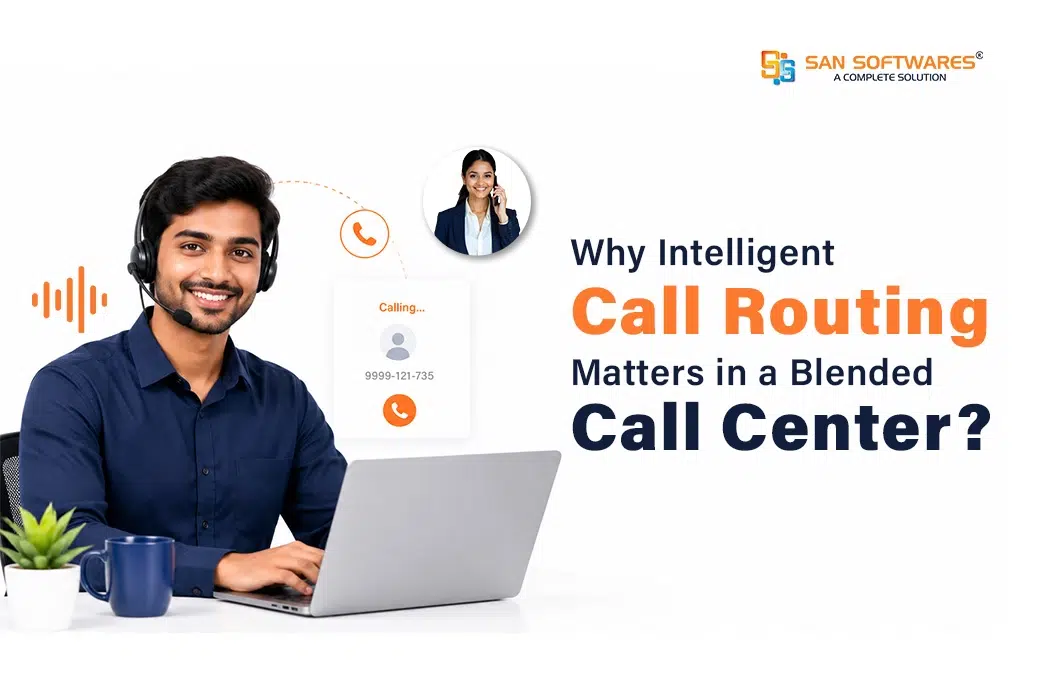
Why Intelligent Call Routing Matters in a Blended Call Center?

Intelligent Call Routing
Summarize with AI:

A blended call center handles both inbound and outbound calls, which means agents need to manage both types of customer conversation in a day. Agents manage a customer support call one moment and contact potential customers the next. Managing these calls efficiently can become difficult when every call is treated the same.

This is where Intelligent Call Routing becomes important. Instead of routing calls to the next available agent randomly, intelligent routing considers factors such as agent skills, customer history, call type, availability, and priority. This helps blended call centers to connect customers with the right agent while keeping outbound calling activities organized.

In this blog, we will know why intelligent call routing matters in the blended call center and it works.

Why Blended Call Centers Need Intelligent Call Routing

Blended call centers handle both inbound and outbound calls, unlike call centers that handle only one type of call. An agent handles service requests, answers support calls, and later makes an outbound call for sales/feedback follow-ups. This makes efficient call distribution for keeping workloads balanced.

Basic call routing simply sends calls to the next available agent based on simple rules. This may not consider the caller’s need, agent skills, previous conversation, or current workload. This can lead to unnecessary transfers, more wait time, and calls reaching agents who may not be the right agent for the customer request.

Smart Call Routing Software uses customer data to make better routing decisions. This solution considers factors like call, purpose, previous customer history, language, agent availability, skills, and call priority before connecting the call.

How Intelligent Routing Works

Intelligent Call Routing works through the main three stages: collecting relevant information, analysing data, and using the results to connect customers with the right agent or queue.

Data Collection

Smart Routing collects data about the callers and the current conversation. It may include customer phone number, customer profile, previous call history, IVR selection, language, location, and reason for calling. The system can also consider Contact Center data like skills, department, agent availability, current workload, and queue status.

Data Analysis

When the caller information is collected, the system analyzes data and matches with routing rules and current call center condition. The system checks real-time queue conditions to determine which right agent or department is available to manage the call. It helps to make routing decisions to be based on real-time conditions rather than a fixed call distribution method.

Strategic Routing and Connection

After analyzing the available details, the system routes the call to the most suitable agent, department, or queue based on routing factors. Call Routing helps the system to avoid sending calls to the busy agents when another suitable agent is available. It helps to reduce wait time, and reduce overloaded queues.

Use Cases of Intelligent Call Routing in Blended Call Centers

Intelligent Call Routing can support several common operations within a Blended Contact Center:

Customer Support

Inbound call support can be routed according to the customer's problem, product, service type, or previous history. This helps to reduce unnecessary call transfers between departments.

Sales and Lead Follow-Ups

New leads and sales inquiries can be directed to available sales agents, while existing leads can be assigned according to territory, product knowledge, or previous queue.

Priority Customer Handling

Based on customer priority, the system can route calls to specific agents through IVR options. It identifies eligible callers like high‑priority customers and places them in a priority queue. It helps to serve ahead of standard callers when an agent becomes available.

Language-Based Routing

Smart Call Routing assigns a call to the agent based on language requirements. This is useful for businesses serving customers across different regions.

After-Hours Support

When calls are received after working hours, routing rules redirect calls to available agents, if no agent is available a voice message plays before call ends. This ensures that customers still receive assistance after working hours.

Balancing Inbound and Outbound Workloads

Blended contact center manages both inbound and outbound calls. Intelligent routing helps to distribute calls to available agents according to the current demand. Call routing helps to prevent one team from becoming overloaded while other available resources remain underused.

Conclusion

A Blended Call Center Solution needs more than a basic system for routing incoming calls. Agents manage different types of customer conversation, the routing process considers some factors like customer information, agent skills, availability, call priority, and current workload.

SAN Softwares’ Intelligent Call Routing Solution helps businesses to connect customers with the right agent, right department, reduce extra call transfers, manage call issues, and improve overall call handling. It also helps blended contact centers use their available agents effectively.

Frequently Asked Questions

A blended Call Center is a contact center where agents manage both inbound and outbound calls from the same platform. Agents solve customer issues, provide support, follow up with leads, make sales calls, and handle other customer interactions.
Intelligent Call Routing is also called Smart Call Routing, which is a call center technology that routes incoming calls to the right agent, team, or queue. It uses predefined rules and available customer detail to decide where each call should be connected. The system considers factors like the customer’s previous interactions, location, current queue size, and workload. By using all this information, intelligent routing makes better routing decisions and helps customers to reach the right agent faster.
Intelligent call routing helps blended call centers to connect each caller with the suitable agent without relying on a fixed routing pattern. It can consider agent skill, call type, priority, and current availability before connecting the call. This makes it easier to manage busy periods, reduce transfers, and keep both inbound support and outbound calling operations running smoothly.

Verify to Start Call

Enter your details and captcha to start the call

Call Us WhatsApp AI Chatbot

Loading…